If you are a citizen of Saudi Arabia, Kuwait, Qatar, Bahrain or Oman, Dubai treats you differently from most international buyers. Dubai law gives GCC nationals the right to own property anywhere in the emirate, not only in the freehold zones open to other foreigners. You also don't need a visa to come and view, sign or collect your keys.
This guide explains what that right means in practice, how the buying process works, what it costs in your own currency, and the points to check before you pay a deposit. It uses official sources: Dubai's legislation portal, the Dubai Land Department (DLD), the UAE Central Bank rulebook and the UAE government portal. It is general information only, so speak to a UAE lawyer and a licensed adviser before you commit.
Exchange rates used in this guide (25 October 2026): USD 1 = AED 3.6725 (UAE peg). Saudi riyal, Qatari riyal, Bahraini dinar and Omani rial figures are worked out from each currency's fixed US dollar peg (SAR 3.75, QAR 3.64, BHD 0.376 and OMR 0.3845 per USD), which gives AED 1 = SAR 1.0211, QAR 0.9912, BHD 0.1024 and OMR 0.1047, matching the Wise mid-market rates on 25 October 2026. The Kuwaiti dinar floats against a basket, so KWD figures use about AED 1 = KWD 0.084 (Wise mid-market, 25 October 2026) and are rounded. All converted figures are for illustration only.
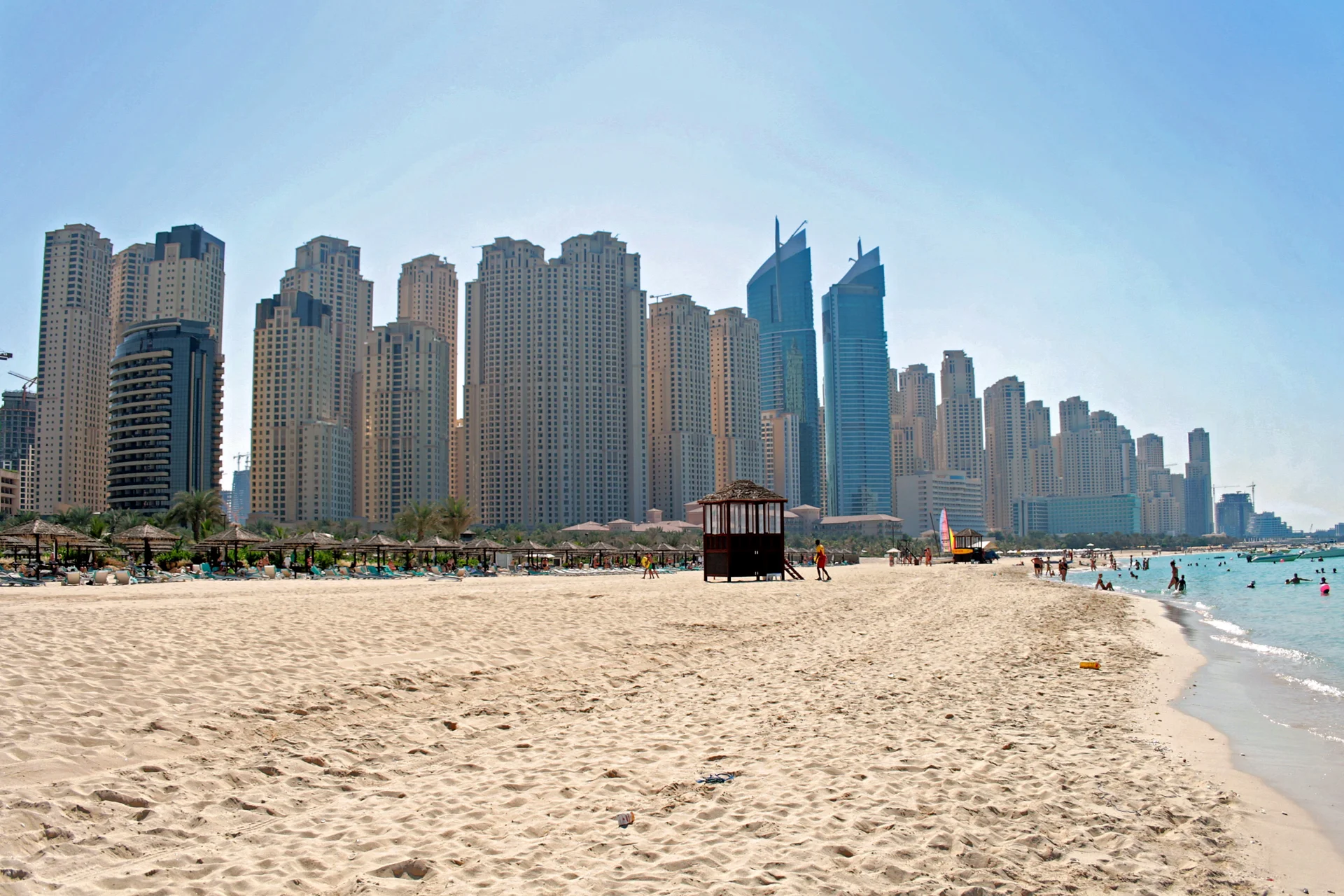
Credit: pe-sa, via Wikimedia Commons, CC BY 3.0
The short answer
| Can Saudi and other GCC nationals buy property in Dubai? | Yes. Dubai Law No. 7 of 2006 reserves the general right to own real property in Dubai to UAE nationals, GCC nationals, companies fully owned by them, and public joint stock companies |
|---|---|
| Where can I buy? | Anywhere in Dubai, according to the Dubai Land Department. Other foreign nationals are limited to areas designated for foreign ownership |
| Do I need a visa or residency? | No. GCC citizens enter the UAE without a visa, permit or sponsor, using a GCC passport or national ID card |
| Main government fee | DLD registration fee of 4% of the price, listed as 2% buyer and 2% seller; the sale contract decides who actually pays |
| Off-plan protection | Payments go into a regulated project escrow account (Law No. 8 of 2007) and the contract is registered on DLD's interim register |
| Currency risk | Low for SAR, QAR, BHD and OMR buyers, because these currencies and the dirham are all pegged to the US dollar. The Kuwaiti dinar is pegged to a basket, so it can move a little |
What "own anywhere in Dubai" means
Dubai Law No. 7 of 2006 on real property registration says the right to own real property in the emirate is restricted to UAE nationals, nationals of the Gulf Cooperation Council member states, companies fully owned by them, and public joint stock companies. Non-UAE nationals from outside the GCC can only be granted freehold, usufruct or leasehold rights of up to 99 years in areas the Ruler designates.
The Dubai Land Department's investor guide, Know Your Rights, puts it plainly: UAE and other GCC nationals, and companies wholly owned by them, may own freehold title and acquire all types of real estate interests, including usufruct, musataha and long-term leases of up to 99 years, anywhere in the Emirate of Dubai. The UAE Central Bank rulebook confirms the same exception: apart from GCC nationals, non-residents and non-citizens can own real estate in Dubai only in the designated investment areas.
| GCC nationals | Other foreign nationals | |
|---|---|---|
| Where you can own | Anywhere in Dubai | Only in areas designated for foreign ownership |
| Types of right | Freehold, usufruct, musataha and leases up to 99 years | Freehold, usufruct, musataha and leases up to 99 years, inside designated areas |
| Company ownership | Companies fully owned by GCC nationals are included | Generally individuals; companies usually buy through a free zone entity |
| Entry to the UAE | No visa needed | Depends on passport |
Two things to watch:
- The right follows your nationality, not where you live. If you are an expatriate living in Riyadh, Kuwait City or Doha but you hold a non-GCC passport, the foreign-ownership rules apply to you. The Dubai government's visitor guide also notes that GCC residents who aren't GCC citizens need an e-visa before travel.
- "Anywhere" is a legal right, not a guarantee every plot is for sale. Older neighbourhoods outside the freehold zones have their own land uses and planning rules. Ask the DLD or a UAE lawyer to confirm the plot and its permitted use before you pay.
In practice, most new launches and branded projects are in freehold communities anyway, so a Saudi or Kuwaiti buyer will usually be choosing from the same projects as everyone else. The wider right matters most if you want a villa or building in an established area such as Jumeirah, Umm Suqeim or Al Barsha. For current options, see our round-ups of Dubai off-plan launches in October 2026, Chevalia Estate 2 villas at Grand Polo and the SAMANA COLLECTA branded residences on the World Islands.
Step-by-step: how a GCC national buys in Dubai
1. Decide between off-plan and ready
| Off-plan (from the developer) | Ready or resale | |
|---|---|---|
| How you pay | In stages under a payment plan, into the project escrow account | Usually in full at transfer, or with a mortgage |
| Registration | Sale contract registered on DLD's interim register (Oqood) within 90 days of signing | Title deed issued at a DLD trustee office on transfer day |
| Use | None until handover | Live in it, use it as a holiday home or let it straight away |
| Main risk | Construction delays; buying from plans and renders | Condition of the unit; existing tenancy terms |
Payment plans vary a lot between developers. Our explainer on a Sobha 20/80 payment plan shows how one works.
2. Check the developer, the project and the agent
- Escrow: under Dubai Law No. 8 of 2007, an off-plan developer must open a separate escrow account for each project with a DLD-accredited bank, and buyers' payments go into it. Pay only into the escrow account named in your contract, never a personal account.
- Interim registration: Law No. 13 of 2008 requires off-plan sales to be registered on DLD's interim real estate register, otherwise they are void. DLD issues a provisional registration certificate. Ask when yours will be issued.
- Broker: use a DLD-registered brokerage and ask for the agent's DLD broker card.
- Contract: check the handover date, late-delivery terms, the payment schedule, service charges and resale terms. A UAE lawyer can review it for you.
3. Sign and pay
Because you don't need a visa, a short trip from Riyadh, Kuwait, Doha, Manama or Muscat is usually the simplest way to view, sign and attend the transfer. If you can't travel, you can appoint a representative under a power of attorney. Ask a UAE lawyer to draft it and confirm how it must be notarised and attested in your country before Dubai authorities will accept it.
Expect the developer, agent, trustee office or bank to ask for proof of where your money came from, as part of the UAE's anti-money laundering rules. Have bank statements ready.
4. Finance, including Sharia-compliant options
Many buyers from the region pay cash. If you'd like finance, ask UAE banks whether they lend to non-resident GCC nationals, the maximum loan-to-value and whether they offer Islamic (Sharia-compliant) home finance. For off-plan, see our article on Mashreq's off-plan home financing with Expo City Dubai.
5. Register and receive your title deed
On a ready purchase, DLD issues an electronic title deed in your name on completion. On off-plan, you receive the provisional registration certificate first and the title deed after handover.
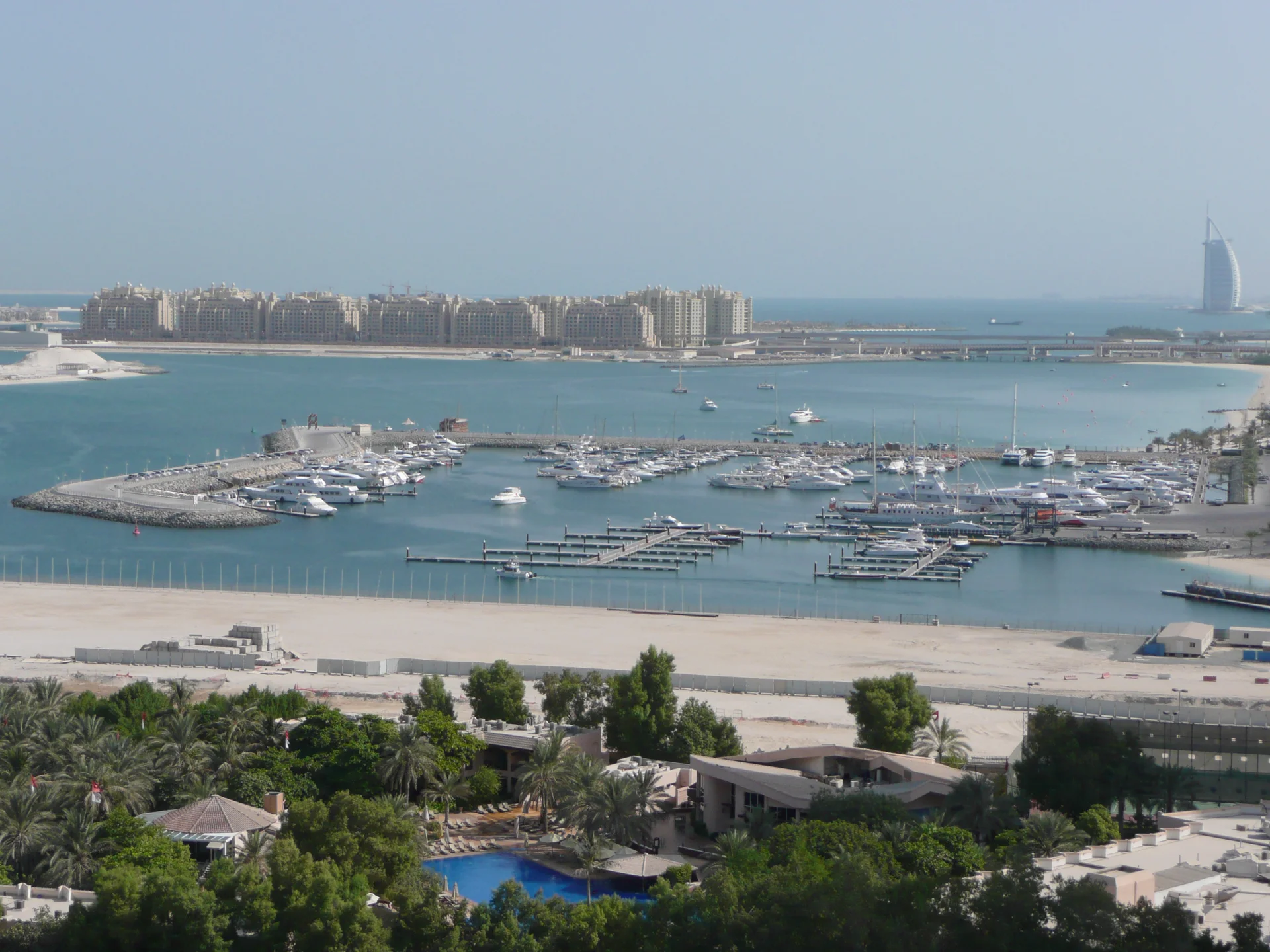
Credit: CT Cooper, via Wikimedia Commons, public domain
What it costs: DLD fees in AED and SAR
DLD's published fees for registering the sale of a ready property include:
| Fee | AED | SAR (approx.) |
|---|---|---|
| DLD registration fee | 4% of the price (listed as 2% buyer, 2% seller) | 4% |
| Trustee office (service partner) fee, sale value AED 500,000 (SAR 510,550) or more | 4,000 + VAT | 4,084 + VAT |
| Title deed issuance | 250 | 255 |
| Apartment or villa map | 250 | 255 |
| Knowledge fee and innovation fee | 10 each | 10 each |
Worked example: a ready apartment at AED 1,500,000
This assumes your contract makes you, the buyer, pay the full 4% DLD fee. If it is split with the seller, your share is lower.
| Item | AED | SAR (approx.) |
|---|---|---|
| Purchase price | 1,500,000 | 1,531,650 |
| DLD fee at 4% | 60,000 | 61,270 |
| Trustee fee incl. 5% VAT | 4,200 | 4,290 |
| Title deed, map, knowledge and innovation fees | 520 | 531 |
| Government and trustee costs | 64,720 | 66,090 |
Not included: agency commission, developer NOC fees on resales, mortgage registration and bank fees if you borrow, and annual service charges. Ask for all of them in writing. Our guide to Dubai property taxes and fees covers the wider costs.
The same prices in other GCC currencies
| AED | SAR | QAR | KWD (approx.) | BHD | OMR |
|---|---|---|---|---|---|
| 1,500,000 | 1,531,650 | 1,486,700 | 126,000 | 153,600 | 157,000 |
| 5,000,000 | 5,105,500 | 4,955,800 | 420,000 | 511,900 | 523,500 |
| DLD fee at 4% of AED 5,000,000 = 200,000 | 204,220 | 198,230 | 16,800 | 20,480 | 20,940 |
Letting the property or using it as a holiday home
Many GCC families buy a Dubai home for school holidays and long weekends, and let it out the rest of the year. Under UAE Cabinet Decision No. 49 of 2023, real estate investment income earned by an individual who isn't required to hold a licence for it is not treated as business income for UAE Corporate Tax. Letting a property as a licensed holiday home can be treated differently, so check the licensing and tax position before you list it on short-let platforms. Ask an adviser in your home country how any rental income is treated there.
Practical tips for Saudi and GCC buyers
- Use your advantage, but verify the plot. Your wider ownership right opens established villa areas, but confirm the land use and title with DLD or a lawyer first.
- Buy in your own name or a fully GCC-owned company. A company only qualifies for the wider right if it is fully owned by GCC nationals.
- Pay only into escrow or official accounts.
- Check the developer's track record with DLD records and recent sale prices, not just the brochure.
- Think about family use. Ask about schools, mosques, parking and privacy for villas, and the building's rules on short lets.
How Luxwell helps GCC buyers
Luxwell Real Estate is a boutique luxury real estate brokerage based in Churchill Executive Tower, Business Bay. We handle off-plan and ready sales and help clients buy, sell and lease across Dubai, and Luxwell ranks in Bayut's top 5 agencies most months.
Our team, led by Chief Sales Officer Nikhil Wadhwa and Chief Operating Officer Divya Wadhwa, can shortlist villas and apartments, compare recent DLD prices, check payment plans and escrow details, and arrange private viewings around your trip. We don't give legal, tax or financing advice, but we work alongside your advisers.
- Call: +971 50 856 2749
- WhatsApp: +971 50 856 2749
- Email: info@luxwellrealestate.com
- Website: www.luxwellrealestate.com
This article is general information only and is not legal, tax or financial advice. Rules change and depend on your circumstances. Speak to a UAE lawyer and a licensed adviser before making decisions. Information checked 25 October 2026.
ملخص باللغة العربية
شراء العقارات في دبي لمواطني السعودية ودول الخليج
- حق التملك في كل دبي: وفقاً للقانون رقم (7) لسنة 2006 بشأن التسجيل العقاري في إمارة دبي، يحق لمواطني دولة الإمارات ومواطني دول مجلس التعاون الخليجي والشركات المملوكة لهم بالكامل تملك العقارات في أي مكان في إمارة دبي، بينما يقتصر تملك غير المواطنين من خارج دول المجلس على المناطق المخصصة للتملك الحر.
- الحق مرتبط بالجنسية: المقيم في دول الخليج الذي لا يحمل جنسية إحدى دول المجلس يخضع لقواعد تملك الأجانب.
- دون تأشيرة: يدخل مواطنو دول مجلس التعاون إلى الإمارات دون تأشيرة باستخدام جواز السفر أو بطاقة الهوية الوطنية.
- الرسوم الرئيسية: رسوم التسجيل لدى دائرة الأراضي والأملاك في دبي 4% من قيمة العقار (2% على المشتري و2% على البائع، ويحدد العقد من يدفع فعلياً)، إضافة إلى رسوم مكتب أمين التسجيل البالغة 4,000 درهم مع ضريبة القيمة المضافة للصفقات بقيمة 500,000 درهم فأكثر.
- حماية مشتري العقارات على الخريطة: وفقاً للقانون رقم (8) لسنة 2007، تودع دفعات المشترين في حساب ضمان خاص بالمشروع، ويسجل العقد في السجل العقاري المبدئي.
- أسعار الصرف: 1 درهم = 1.0211 ريال سعودي تقريباً (25 أكتوبر 2026)، والأرقام المحولة للتوضيح فقط.
هذا المقال معلومات عامة وليس استشارة قانونية أو ضريبية. للاستفسار تواصلوا مع Luxwell Real Estate عبر الهاتف أو واتساب على الرقم 2749 856 50 971+.
Sources
- Dubai Legislation Portal: Law No. 7 of 2006 Concerning Real Property Registration, Regulation No. 3 of 2006 on areas for ownership by non-UAE nationals and Law No. 8 of 2007 Concerning Escrow Accounts
- Dubai Land Department: Know Your Rights investor guide and Property sale registration
- UAE Central Bank Rulebook: Openness to foreign purchasers
- UAE Government portal: Do you need a visa to enter the UAE? and Visit Dubai: Do you need a visa to enter Dubai?
- Exchange rates: currency pegs of the UAE, Saudi, Qatari, Bahraini and Omani central banks; Wise mid-market rates, 25 October 2026
Frequently Asked Questions
Can Saudi citizens buy property in Dubai?
- Yes. Under Dubai Law No. 7 of 2006, nationals of Gulf Cooperation Council states, including Saudi Arabia, have the right to own real property in Dubai, and the Dubai Land Department says GCC nationals can own freehold property and other real estate rights anywhere in the emirate.
Can GCC nationals buy outside Dubai's freehold areas?
- Yes. The designated freehold areas apply to foreign nationals from outside the GCC. UAE and GCC nationals, and companies wholly owned by them, can own anywhere in Dubai, though you should still confirm the plot's title and permitted use with the Dubai Land Department or a UAE lawyer.
Does the GCC ownership right apply to expatriates living in Saudi Arabia or another GCC country?
- No. The right depends on nationality, not residence. An expatriate living in a GCC country who holds a non-GCC passport is treated as a foreign national and can buy in Dubai's designated freehold areas.
Do GCC citizens need a visa to buy or view property in Dubai?
- No. According to the UAE government portal, GCC citizens don't need a visa, permit or sponsor to enter the UAE and can use a GCC passport or national ID card at entry.
What fees do I pay when buying property in Dubai?
- The main government fee is the Dubai Land Department registration fee of 4% of the price, listed as 2% buyer and 2% seller, with the contract deciding who pays. For ready property sales of AED 500,000 or more there is also a trustee office fee of AED 4,000 (about SAR 4,084) plus VAT, and small title deed and map fees. Rates used: AED 1 = SAR 1.0211 on 25 October 2026.
Is there currency risk for Saudi buyers?
- Very little from the exchange rate itself, because the Saudi riyal (SAR 3.75 per USD) and the UAE dirham (AED 3.6725 per USD) are both pegged to the US dollar. The Qatari riyal, Bahraini dinar and Omani rial are also pegged to the dollar, while the Kuwaiti dinar is pegged to a basket of currencies.
How are off-plan buyers protected in Dubai?
- Under Dubai Law No. 8 of 2007, developers selling off-plan must open a separate escrow account for each project, and buyers' payments go into it. Off-plan sales must also be registered on the Dubai Land Department's interim real estate register.
Can a company owned by GCC nationals buy property anywhere in Dubai?
- Dubai Law No. 7 of 2006 extends the ownership right to companies fully owned by UAE or GCC nationals. A company with any non-GCC shareholder does not qualify for that wider right, so check your structure with a UAE lawyer.
Related reading
- Dubai Off-Plan Launches October 2026: Every New Launch in Dubai This Month
- Understanding Dubai Property Taxes: The Ultimate 2025 Guide for Investors
- Mashreq Partners With Expo City Dubai on Off-Plan Home Financing: What It Means for Buyers
- Chevalia Estate 2 by Emaar: Grand Polo Villas from AED 7.8M
- Nikhil Wadhwa – Chief Sales Officer, Luxwell Real Estate
Request details
Leave your details to download the details